

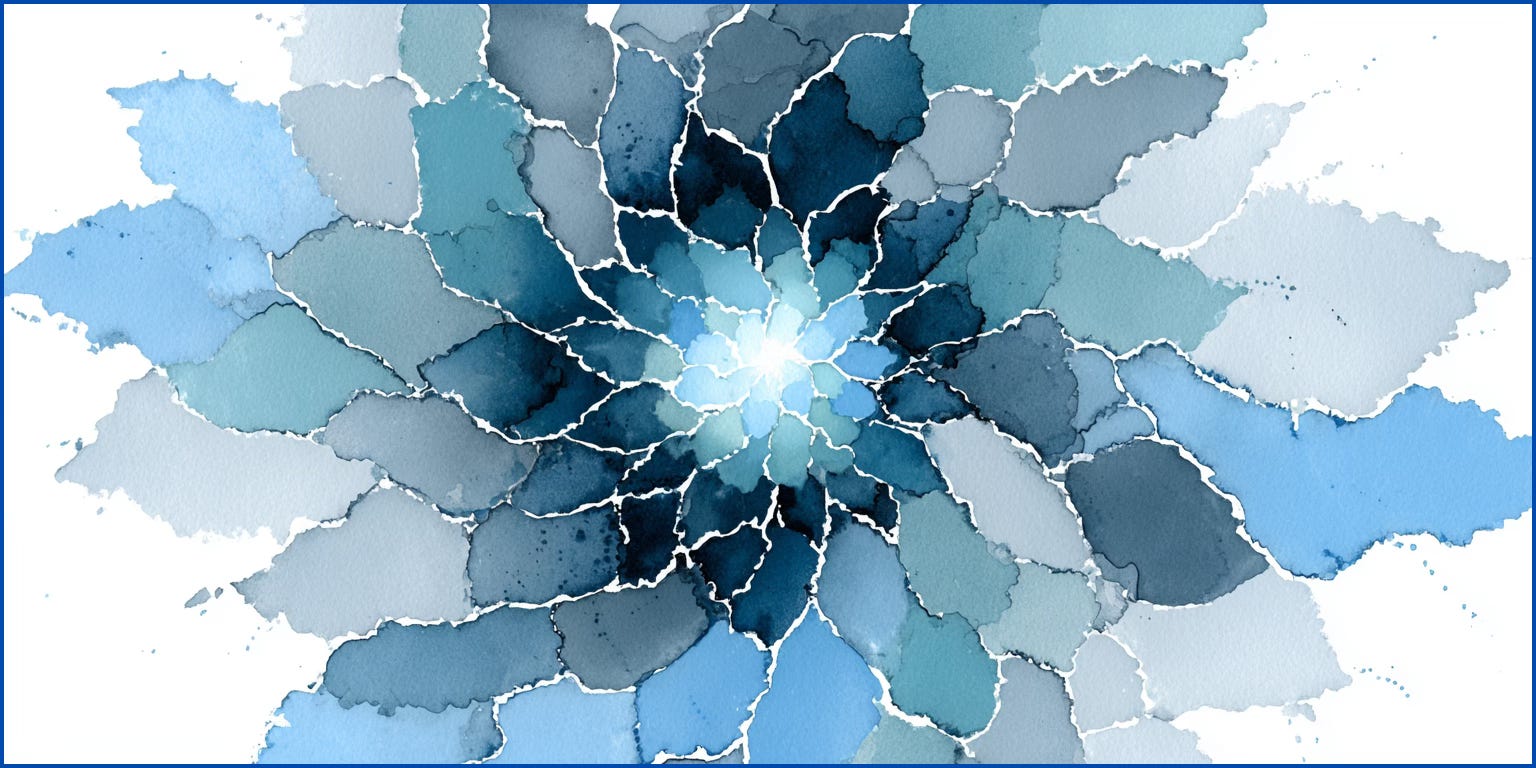
Ecology, within the Paraclete Taoist framework, is the study of relationships, coherence, and participation across all scales of existence.
It begins with the recognition that nothing exists in isolation. Every person, organism, organ, community, thought, and economic activity is shaped by the quality of its ongoing exchanges with the larger systems of which it is part.
When these exchanges lose balance, rhythm, reciprocity, or honesty, the consequences appear as disease, fragmentation, exhaustion, strained relationships, and broader social and environmental challenges. In the work of the Paraclete Foundation, ecology is therefore more than environmental concern. It is a practical framework for understanding and restoring right relationship — supporting the health of individuals, communities, and the living world.
The Human Body as an Ecology
Human beings participate directly in the world around us. Our consciousness, nervous system, and physiology have developed through constant interaction with light, air, movement, seasons, and living environments. The body is not separate from its surroundings; it is itself an ecology.
This understanding explains why personal health — energy, immune function, mood, attention, and sense of meaning — responds so strongly to daily conditions: the food we eat, our exposure to natural light and rhythms, the quality of rest, and the relationships we maintain. Many modern health difficulties arise from disrupted connections between people and their physical, social, and cultural environments. The Foundation’s work therefore supports the restoration of these relationships as a contribution to public health and wellbeing.
Coherence as the Central Principle
Coherence lies at the heart of the Paraclete framework. It is the capacity for diverse parts to remain intelligently connected — avoiding both chaos and harmful isolation. A coherent immune system, family, community, local economy, or ecosystem maintains balance through clear communication, flexible boundaries, natural rhythms, and responsible stewardship of resources.
These organising patterns recur across scales: from cellular processes to landscapes and societies. Recognising them allows the Foundation to promote practical coherence in individual lives and collective systems alike.
Ecology, Ethics, and Public Benefit
The practices of a community — how it grows and distributes food, designs living spaces, organises work and rest, communicates, and manages resources — directly influence the health of its people, waterways, soils, and future generations. The Foundation works to advance these understandings so that ethical living becomes visible in healthier bodies, stronger communities, cleaner environments, and greater capacity for meaning and resilience.
In this way, ethics are not abstract. They produce real ecological and social outcomes. By fostering honesty, reciprocity, restraint, and respect, the Foundation contributes to public welfare and the relief of suffering caused by disconnection, depletion, and imbalance.
A Living, Relational Order
The Paraclete approach integrates scientific knowledge with traditional wisdom. It views life as an intelligent, relational process involving matter, energy, information, and consciousness. Biological development, ecosystems, and human societies all unfold through patterns of timing, orientation, communication, and relationship rather than purely mechanical processes.
This perspective supports the Foundation’s commitment to evidence-informed practice while recognising deeper dimensions of health and human flourishing.
Healing and Restoration
Healing in this framework begins with ecology. Rather than addressing only isolated symptoms, the Foundation encourages attention to the quality of relationships — with the body, food and light, daily rhythms, community, meaningful work, truthful communication, and the living world. These efforts advance health by supporting the body’s own intelligence and the conditions that allow it to thrive.
Spirituality as Ecological Participation
Spirituality within the Paraclete tradition is expressed through deeper alignment with the patterns that sustain life: simplicity, reciprocity, attentiveness, reverence, and responsible care. It is not separate from embodiment or community but lived through the quality of our relationships with body, land, time, others, and the deeper order that connects all things.
By supporting spiritual development grounded in these principles, the Foundation advances religion and contributes to individual and collective wellbeing.
Ecology as a Unifying Foundation for Our Work
Ecology serves as a central unifying concept for the Paraclete Foundation. It bridges personal health and civilisational health, physiology and ethics, inner coherence and outer action. Through education, research, community initiatives, and practical programs, the Foundation seeks to relieve suffering, advance health, protect and restore natural environments, and promote a more coherent, reciprocal way of living for the public benefit.
The Foundation operates as a not-for-profit entity entirely dedicated to these charitable purposes. All resources are applied solely toward the advancement of these aims for the benefit of the wider community.